Showing posts with label Normandy. Show all posts

Wednesday, June 11, 2014

Calvados Recipes

Calvados is an apple brandy made in the Normandy/Brittany area of France. I bought some to try and it had a recommended recipe on the back:

Ingredients
Jack Rose
  4 cl Calvados Pere Francois VS
  2 cl jus de citron
  1 cl sirop de grenadine

Shakez ces ingredients et servez dans un verre a cocktail!, which according to Google Translate is "Shake well these ingredients and serve in a cocktail glass!" Also, 4 centiliters is about 1.35 ounces. For my drink, I combined 1/2 oz. of grenadine, 1 ounce lemon juice, and 2 ounces Calvados. The recipe doesn't mention ice so I tried shaking it without ice and it tasted alright. It's still got the sharp brandy flavor but the lemon juice and grenadine give it some complex tastes I like. 

I tried it another day with ice and it is not as good. I guess the recipe left the ice out for a reason!


I thought I would invent my own recipe based on my recent travels.

European Union
  1/2 oz. Raki (after dinner wine from Crete/Greece)
  1/2 oz. Limoncello (lemon apertif from Italy)
  1/2 oz. Calvados (apple brandy from France)
  1/2 oz. Lewza Liquor (almond apertif from Malta)
  1/2 oz. Unicum Zwack (alcoholic poison from Hungary)
  1/2 oz. Jura (whiskey from Scotland)
  1/2 oz. Green Chartreuse (herbal liquor from France)
  1/2 oz. Porto Calem (dry port from Portugal)

Actually, this sounds like such a disaster that I should rename it "The League of Nations." I have not made this drink, nor do I recommend it.

To apologize for the above invention, here are some cute pictures of the kids from France:

L is blinded by patriotism

Some shop was playing Gangnam Style and J danced

Tuesday, June 10, 2014

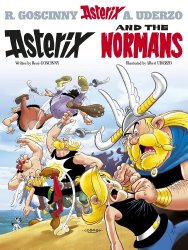
Book Review: Asterix and The Normans by R. Goscinny et al.

Asterix and The Normans by Rene Goscinny et al.


After writing about the D-Day invasion of Normandy and the 1066 invasion of England from Normandy, here's another tale on the subject...

Another classic Asterix adventure happens when the Norse men, who don't know the meaning of fear, decide to fill out their education by learning about fear from the Gauls. Also, they've heard that fear gives you wings, so then they will be able to fly! They sail to Gaul and unfortunately land right by Asterix's home village, where they also don't know the meaning of fear. The only exception is Chief Vitalstatistix's teenage nephew Justforkix, who is visiting from Lutetia. The chief's brother wants his southern relatives to toughen up the lad. The boy is into music (he even likes Cacofonix's music?!?) and having a good time. The Norman invasion provides the perfect opportunity to toughen him up.

The comedy here is great. The Normans have a similar naming pattern to the Gauls. The Norman chief is called Timandahaf, while his compatriots have names like Nescaf and Fotograf. Vitalstatistix even makes fun of them for it. Another ongoing joke is Norman cuisine which is any type of meat in a cream sauce. The usual assortment of puns and sight gags are on display as well. A laughed a lot reading this book.


Friday, June 6, 2014

Pegasus Bridge, France

The Memorial Pegasus is a great museum in Normandy and the home of Pegasus Bridge, one of the objectives during D-Day in World War II. Soldiers from the British 6th Airborne Division came in on gliders and were to capture this bridge over the Caen Canal and nearby Ranville Bridge over the Orne River. Without the bridges, German armored units could not flank the Sword Beach landing.

The sign on the museum

Flags by the museum

The British forces were led by Major John Howard. They mostly landed right on target just after midnight on the morning of June 6. They took the Germans by surprise and lost only two men. The bridges were taken in ten minutes. The operation was a smashing success.

The museum part of the site is well done. The usual assortment of weapons and vehicles are on display inside, along with quite a bit on parachutes and on individual soldiers who fought in the battle.

Various weapons

J by the communications equipment

A model of the bridge

J and a jeep

Explanation of parachute colors

Actual parachutes

Decoys (the foil strips were used to fool radar)

A video is shown in the museum about the attack and the museum's opening. The museum was dedicated by the Prince of Wales, Charles, in 2000. The video played alternately in French and English. After watching the video, we went outside to see the actual bridge. On our way, one of the museum workers told us she had to show us something. We followed her out to the bridge.

Pegasus Bridge

She took us onto the bridge and showed us some holes drilled into the side. She said the Germans hung explosives on the bridge in case they had to detonate the bridge during an attack.

Barely visible here

Two horizontal holes at the top and two diagonal on the left

The Germans took the explosives in at night to prevent the French Resistance from sneaking onto the bridge, stealing the explosives, and using them on some other strategic target. When the British troops attacked, the explosives weren't there. They spent a good deal of time looking for them and eventually gave up. The movie The Longest Day shows the raiders swimming up under the bridge and removing the explosives--just a bit of literary license, the worker explained.

She also showed us some of the bullet holes from the attack.

Bullet-riddled counterweight

The bridge stood over the canal until the 1990s. It was lengthened slightly when the canal was widened.

View from the end of the bridge

View from the other side

Eventually the French government decided to replace the bridge in 1993 with a wider and stronger bridge. The old bridge was taken to a dump. The museum guide said this was a very unpopular decision in 1994 (the 50th anniversary of D-Day) and locals started a new movement to open a museum nearby the original bridge location.

View from the museum to the new bridge

We thanked her and began to explore the outdoors displays. A replica of one of the Horsa gliders is on the grounds, with a fake soldier inside.

Horsa glider with J posing

Inside the glider

A statue of Brigadier James Hill, the most senior surviving British officer from the D-Day Invasion, is also on display. He died in 2006.

James Hill statue

The grounds also have several pieces of artillery and vehicles.

Bofors 44 mm gun

M3 A1 Half Track

Quadruple 12.7 mm anti-aircraft gun mounting (commonly mounted on half tracks)

25-pounder field gun

5.5 inch gun

The museum is definitely worth a visit and was inspiring to me and my children.

Happy 70th D-Day anniversary to all reading when this post publishes!

Thursday, June 5, 2014

German Battery at Longues-sur-Mer, France

Just outside Bayeux, on the English Channel coast, is one of the best preserved World War II-era German gun emplacements. Hitler wanted to build an impregnable wall of defenses along the western coastline of Europe, the Atlantic Wall. Nazi propaganda claimed there were 22,000 concrete bunkers in the Netherlands, Belgium, and France. In reality, the guns larger than 7.5 cm caliber (just under 3 inches) only numbered 2,692. They were enough to make the D-Day landings (whose 70th anniversary is the day after this post is published) a bloody and difficult invasion.

Most of the guns of the Atlantic Wall were used for scrap metal after the war, but the artillery battery at Longues-sur-Mer still stands 70 years later. They have a nice visitor center with plenty of good information about the guns and support buildings, including a map (which is more helpful if you know French).

A French preview of the rest of this post!

We walked from the visitor parking to the guns, a fairly short walk. The first gun is a bit of a disappointment.

Guns in the distance

The first bunker was a bust

Remains of the gun

The other bunkers, or casements as they are often called, are much more satisfying and surprisingly similar. Mass production of the defenses required the same designs be used again and again. These particular guns are 15 cm (6 inch) caliber guns with a range of 20 km (about 12 miles). L and J loved exploring inside the heavily fortified gun placement. They were buried in concrete to protect them from aerial bombing.

L by the gun

The gun's rear end in the firing chamber

View from next to the gun

The back entrance

Ammunition and other supplies were held inside the casements. Additional ammo was stored in the fields near the gun. Again, they were placed underground for safety. We explored one such storage area. Similar shelters were quarters for the artillerymen. Now the floors were full of water, so we didn't go inside.

Ammunition bunker

We also discovered bases where other, smaller guns were placed.

Gun emplacement, probably for machine guns

Outside we heard some buzzing sounds and were surprised to see para-gliders flying through the sky. One swooped low enough for us to wave back and forth.

Someone's coming!

Enjoying the good weather in style

On the cliff-edge is the firing command post, a two-story bunker used to direct the guns. Information was passed back by telephone.

Front of the firing command post

View of the sea from outside the bunker

More of the view

The upper floor of the bunker is the telemetry post, where they observed targets with special optical devices. They had views of the approaches to Omaha and Gold beaches where Allied forces landed on June 6, 1944 (i.e. D-Day).

L and J in the telemetry post

Downstairs is calculation and transmission room, where the data from upstairs was analyzed and provided to the guns.

Down the dark stairs

The room is not very interesting without equipment in it

The front room downstairs has a 180 degree view through a small slit called the crenel.

The crenel with the sun shining through

View through the slit

Naturally, the exit for the command post is at the back. We made our way back to the car with one last view of the gun casements.

Back of the firing command post

Concrete casements just visible behind the command post

These guns were bombed heavily in the lead up to D-Day. The massive bombing only succeeded in destroying the telephone lines buried between the casements and the firing command. As ships approached land, various destroyers fired on the guns as the guns fired back. After three hours the battery ceased firing at 0845. On June 7, the Second Battalion Devonshire Regiment (which had landed on Gold Beach) approached the battery. The 200 German gunners (mostly in their 40s) surrendered without a fight.

The next post will also be in honor of D-Day--our visit to Pegasus Bridge!